

Key Takeaways
- Compliance is your foundation: The TCPA requires explicit opt-in consent before texting donors. Proper consent language should clearly state what recipients are signing up for: "By providing your mobile number, you agree to receive updates and donation requests from [School Name] via text message"
- Compliant practices drive better results: When someone actively opts in, they're signaling genuine interest in giving. These opted-in supporters consistently outperform broader email lists by 2-3x in response rates and gift size
- Build and maintain your list properly: Collect consent through donation forms, reply cards, and events. Segment by constituent type, honor opt-outs immediately, and maintain clean lists for better deliverability and engagement
- Start small and compliant: Begin with 200-300 opted-in contacts and one campaign this fall or winter. Keep messages concise (under 160 characters), send only 2-3 fundraising texts per month during peak season, and track results to optimize your approach
Why Text?
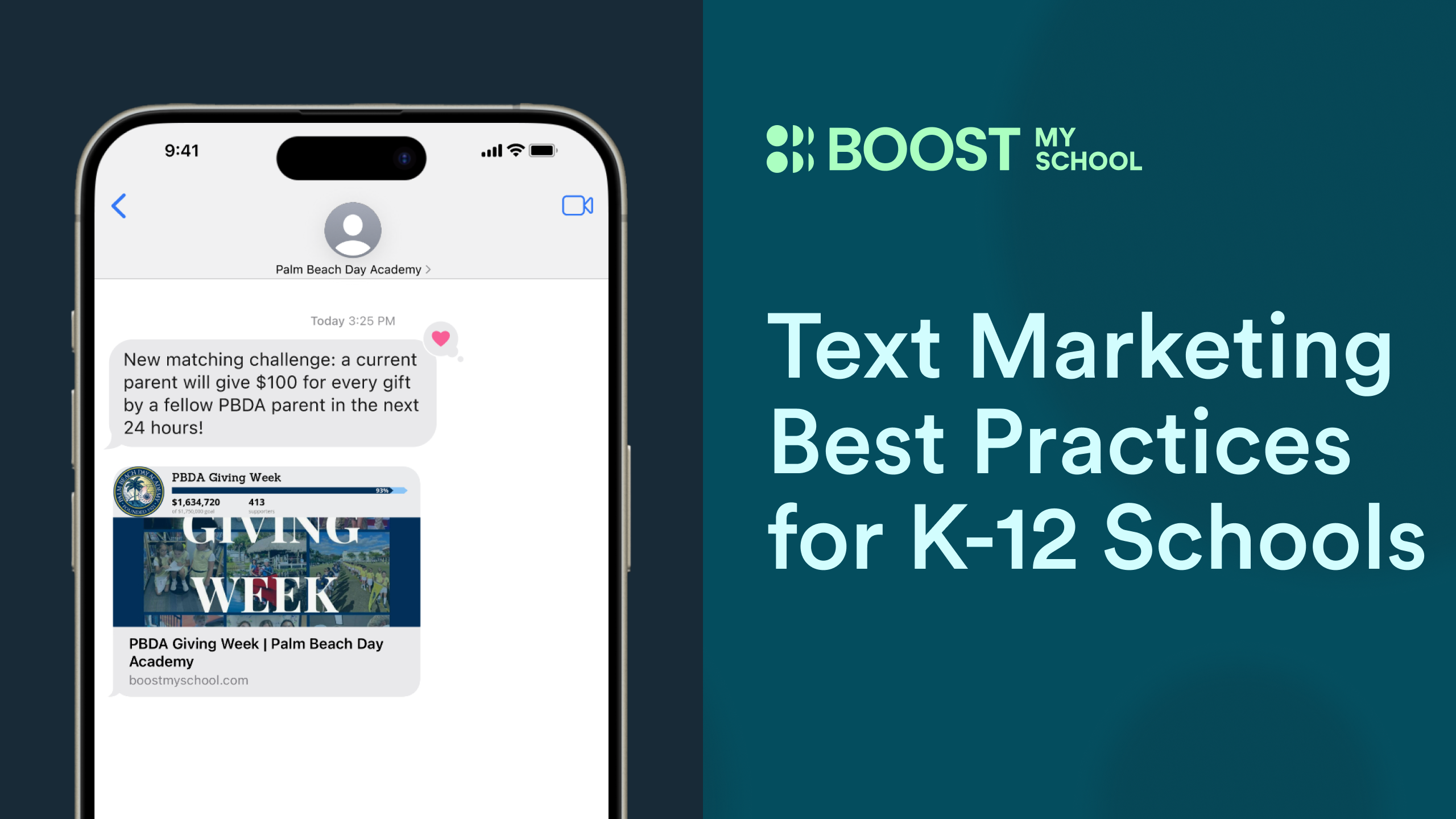
Your school community is busier than ever. Parents are juggling work, carpools, and countless school emails. Alumni are building careers and families. Yet there's one channel that cuts through the noise: text messaging. While your carefully crafted emails see 30-35% open rates, text messages are opened by 98% of recipients, most within three minutes.
For independent and Catholic schools, where personal relationships drive giving, text messaging offers something transformative: the ability to reach your donors in real-time, right where they already are.
If you're hesitant about text, you're not alone. Many development professionals worry about seeming intrusive. But here's what schools are discovering: when done thoughtfully, text giving feels less like marketing and more like the personal communication your community already expects from your school.
Text serves as a strategic complement to your existing efforts, creating touchpoints that feel personal, timely, and respectful. Schools that have embraced text giving are seeing gift and RSVP rates double or triple compared to email alone.
Understanding Text Compliance & Regulations
Before you send your first text, understand the rules that govern text messaging. The good news? Compliance is straightforward, and most requirements align with the respectful communication practices your school already uses. Even better: following these guidelines isn't just about avoiding problems. It's the foundation for higher engagement, more gifts, and better event attendance.
The Telephone Consumer Protection Act (TCPA) is the primary law governing text messaging in the United States. At its core, the TCPA requires one thing: consent. Before you can text someone for fundraising, they need to opt in to receive messages from your school. This might sound like a barrier, but it's actually an advantage. When someone actively chooses to receive your texts, they're signaling genuine interest in giving. These are your most engaged supporters, and they respond accordingly.
What does proper consent look like? It should clearly state what they're signing up for. For example: "By providing your mobile number, you agree to receive updates and donation requests from [School Name] via text message."
When you follow these guidelines, you're not just staying compliant; you're building trust with your donors by showing that you respect their preferences and privacy. That trust translates directly into action. Donors who feel respected give, attend your events, and stay connected to your mission for years to come.
Building Your List
Now that you understand compliance, let's talk about building a text list that drives results. The most common question development professionals ask is: "How do I get people to opt in?" The answer is simpler than you think.
Your best opportunity to grow your text list is through channels where your community is already engaged. Add a text opt-in option to your annual giving reply cards and online donation forms. Include a signup link in your email newsletters: "Get important school updates and easy ways to support [School Name] right on your phone."
Promote it at events like back-to-school nights, homecoming, and parent coffees. The key is making it easy and explaining what they'll receive: timely updates, simple giving opportunities, and event information they won't want to miss.
Once people opt in, segmentation becomes your secret weapon. Current parents care about different things than alumni from the class of 1985. By segmenting your list by constituent type (current parents, alumni by decade, grandparents, faculty and staff), you can send targeted messages that feel personal and relevant.
List hygiene matters more than you think. Regularly remove phone numbers that have opted out or are no longer working. Update contact information when families graduate or alumni move. Clean lists mean better deliverability, lower costs, and more accurate metrics.
Think of your text list as a living asset that grows stronger over time. Start with your most engaged donors and expand from there. Schools that begin with even 200-300 opted-in contacts see meaningful results.
Best Practices Across All Campaigns
Regardless of which campaign you're running, certain best practices will maximize your results and keep your community engaged.
Keep messages concise and actionable. Aim for 160 characters or less, never exceeding 300 characters. Every message should have one clear call to action: "Give now: [link]" or "RSVP here: [link]." Your donors are reading on their phones, often while multitasking. Make it easy for them to understand and act immediately.
Personalize whenever possible. Use first names and reference giving history when appropriate.
Test and optimize. Track your open rates, click-through rates, and conversion rates. Test different sending times and messages with small segments before broad campaigns. Let data guide your strategy.
Make giving frictionless. Links should go directly to mobile-optimized giving pages with prefilled information. The best experiences allow donors to complete a gift in under 30 seconds.
Taking the First Step
If you've made it this far, you might be thinking: "This sounds great, but where do I actually start?" The answer: start small, start now, and let results guide your growth.
The schools seeing the biggest success with text didn't launch with thousands of contacts or complex campaigns. They started with a few hundred opted-in donors and one clear goal. Maybe it was Giving Tuesday. Maybe it was a year-end appeal. The point is they started, learned what worked, and built from there.
Your donors want this. They're already texting with their children's teachers, receiving school closure alerts, and getting athletic schedule updates via text. Adding development communications isn't intrusive when done thoughtfully. It's meeting your community where they already are.
Your first step? Choose one campaign this fall or winter. Build a small opt-in list. Send a few well-crafted messages. Track your results. You'll quickly see why text has become an indispensable tool for independent and Catholic school development teams.
The schools that thrive in fundraising aren't the ones with the biggest budgets or largest communities. They're the ones that meet donors where they are, communicate with respect and clarity, and make giving as easy as possible. Text messaging allows you to do all three.